
Manifestation Without the Magic: Vision Plus Action
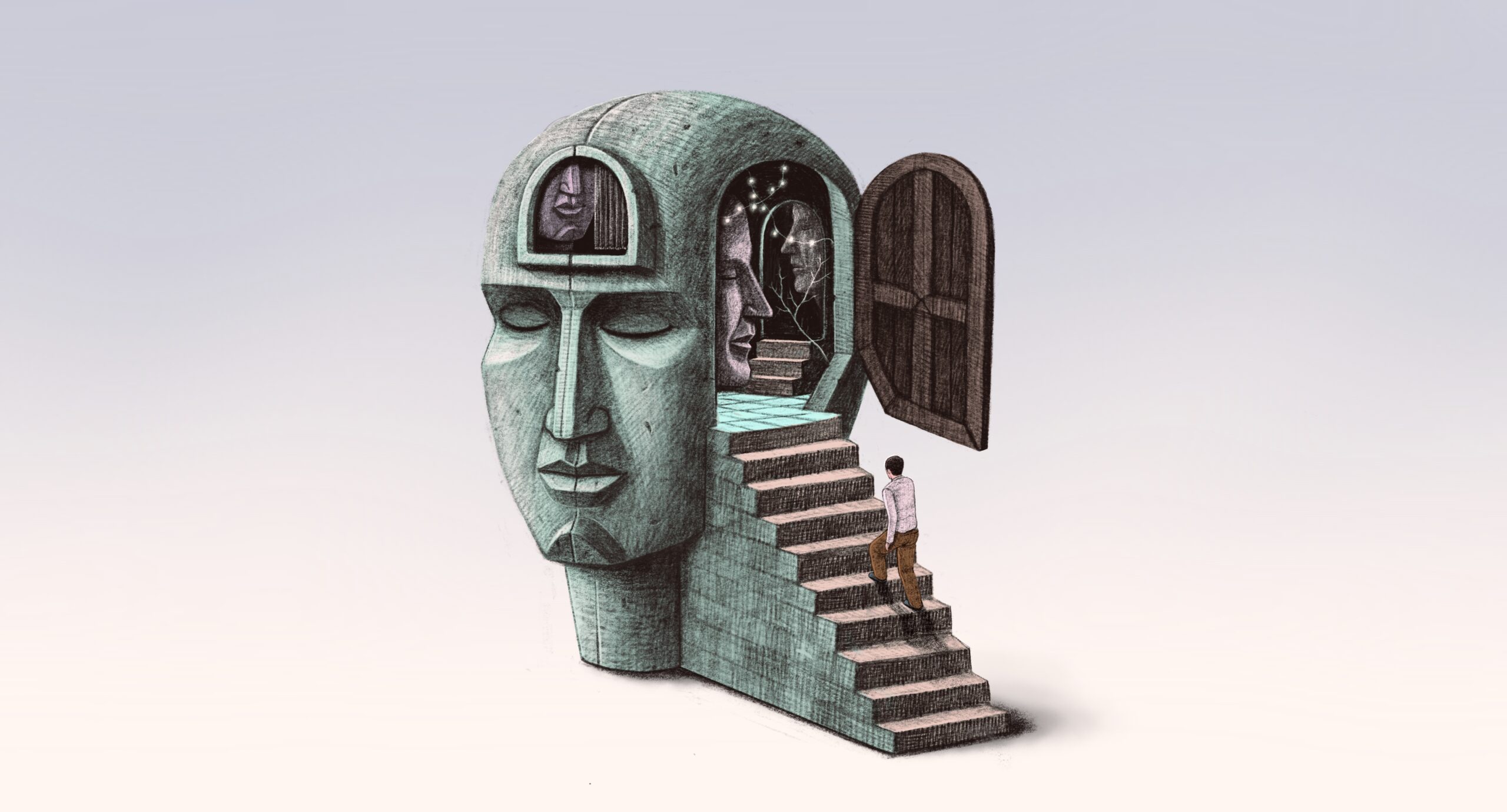
Week three begins with a word that gets people arguing: manifestation. Half the world swears by it, half rolls its eyes, and as usual both halves are holding one piece of something that only works whole.
Here’s the piece that’s real. When you hold a clear, detailed image of what you want, your attention changes. You start noticing doors that were always there: the course, the contact, the conversation that suddenly seems relevant. Psychologists have unromantic names for this, selective attention, priming, but the effect is honest: what you keep in front of your mind, you begin to see in the world. A vivid vision also steadies you. People who can picture where they’re going persist longer when the road turns, because the destination feels real enough to be worth the detour. None of this is cosmic. All of it is useful.
You’ve felt a small version of this already. Think of the last time you decided to buy a particular car, or a particular pair of shoes. Within a week, that exact model was everywhere: three in your street, one in every car park. The world hadn’t changed. Your filter had. A written dream does the same thing to opportunities. The mentor, the evening class, the half-price studio space, they were always in your feed and your neighbourhood. The vision is what makes them visible.
Take Leila. She’d wanted to open a small bakery for years, and she did what the manifestation books told her: a board above her desk, photographs of marble counters and queues out the door, ten minutes of picturing it every morning. She loved those ten minutes. They were the best part of her day. Two years later the board had faded in the sun and Leila had baked for exactly four birthdays. The picturing felt so much like progress that it had quietly replaced progress. She wasn’t lazy. She was satisfied, a little, every morning, on credit.
Hold onto that filter idea, because it’s the honest core of every manifestation claim that survives contact with evidence. Your brain meets millions of signals a day and can afford to surface only a handful. Something has to decide which handful, and that something is largely whatever you’ve marked as important. A written, detailed, regularly revisited dream is a flag on the sorting system. People experience the results as luck, or as the universe conspiring, and the experience is real even where the explanation is romantic. The course was always listed. The contact was always two introductions away. You simply became the kind of person whose attention catches on them. That part of manifestation you should keep, use, and never apologise for.
That’s the piece the eye-rollers are right about. Researchers led by Gabriele Oettingen spent years testing pure positive visualisation, and the results are uncomfortable for the vision-board industry: people who only imagined the successful outcome achieved less than people who didn’t. The reason is almost funny. Vivid imagining feels so satisfying that the brain partially banks the achievement, relaxes, and the drive to actually pursue it drains away. The dream, admired daily, becomes a sedative.
It’s worth sitting with how consistent her findings were, because this wasn’t one odd study. Oettingen and her colleagues tested the pattern across very different lives: people trying to lose weight, students facing exams, graduates hunting for jobs, people hoping a crush would turn into a relationship. Again and again, the ones who spent the most time in pure positive fantasy did worse over the following weeks and months than the ones who thought about the future in more mixed, realistic terms. In some of her work, the fantasising even showed up in the body: people relaxed physically after indulging the dream, as though a portion of the work had already been done. The mind had taken its reward in advance and left less fuel for the actual road.
“A vision is a compass, not a couch.”
Her fix, tested across weight loss, exams, and careers, is called mental contrasting: picture the outcome and then, immediately, the obstacle in your way and the action you’ll take when you meet it. Vision, obstacle, step. The picture gives direction; the step gives motion; naming the obstacle keeps you honest between them. In her later work this became a simple four-part routine: name the wish, feel the outcome, name the obstacle inside you, then make a plan for the moment the obstacle shows up. Notice where the obstacle lives in that sequence. Inside you. Oettingen found the useful obstacle is rarely the economy or the weather. It’s the 9pm tiredness, the fear of looking foolish, the phone in your hand. Those you can plan for, tonight.
When Leila finally heard about this, she changed one thing. After her ten minutes of marble counters, she asked herself out loud: what’s actually in the way this week? The answer embarrassed her with its smallness: she’d never once costed an oven. So the vision stayed, and underneath it went one line: “When I catch myself daydreaming about opening day, I open the spreadsheet for ten minutes.” The board stopped being a sedative and became a signpost. Eight months later she was renting a shared kitchen on Sundays. The dream hadn’t grown a single centimetre. Her feet had just started moving under it.
This is exactly how your app treats a dream: never just visualise, always visualise then take today’s step. And the guided manifestations you’ll use this week are built the same way. Vision as compass, never as couch.
Today’s act is your first guided manifestation of the week, and it runs on precisely this machine. Find somewhere quiet and let world-renowned coach Paul McKenna walk you through manifesting your relationships, the vision half, vivid and felt, no eye-rolling required. Then do the part the vision-board industry forgets: choose one relationship to deepen this year. Just one, the one that would change something real if it grew. That is your obstacle-and-step in a single move, because choosing one means facing the small resistance that has kept it where it is, the call you don’t quite make, the visit you keep meaning to arrange. Name the relationship. Then name the first tiny thing you’ll do when the resistance shows up: “When I catch myself putting it off, I send one message.” Vision, then step. The manifestation gives the direction. The choice gives the motion.
And be gentle with yourself about the hardest part, which is rarely the vision. It’s the obstacle, because naming it accurately means admitting the enemy is domestic. It would be easier if the reason you and that person drifted were distance, or time, or their fault; those can’t be fixed on a Tuesday night, so blaming them excuses everything. The truth is usually a small avoidance on your side, and small avoidances can be planned for, which is exactly why naming them stings. Name it anyway. Oettingen’s whole body of work points at one quiet truth: the people who get where they imagined going are the ones who let the obstacle into the picture and gave it a job.
One more thought before you begin. You’ve spent two weeks proving you can take steps. Fourteen days of small votes, none of them aimed very far. This week the challenge hands you the other half: somewhere to aim them. A step without a vision wanders. A vision without a step sedates. You now hold both, and holding both is rarer than it sounds.
See it clearly. Then walk.