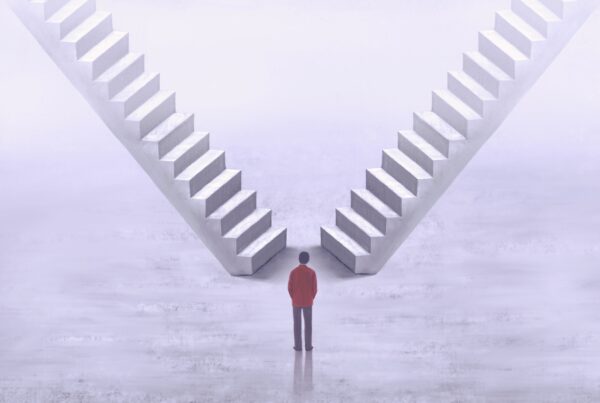
The Future Self: Why Talking to Who You’re Becoming Works
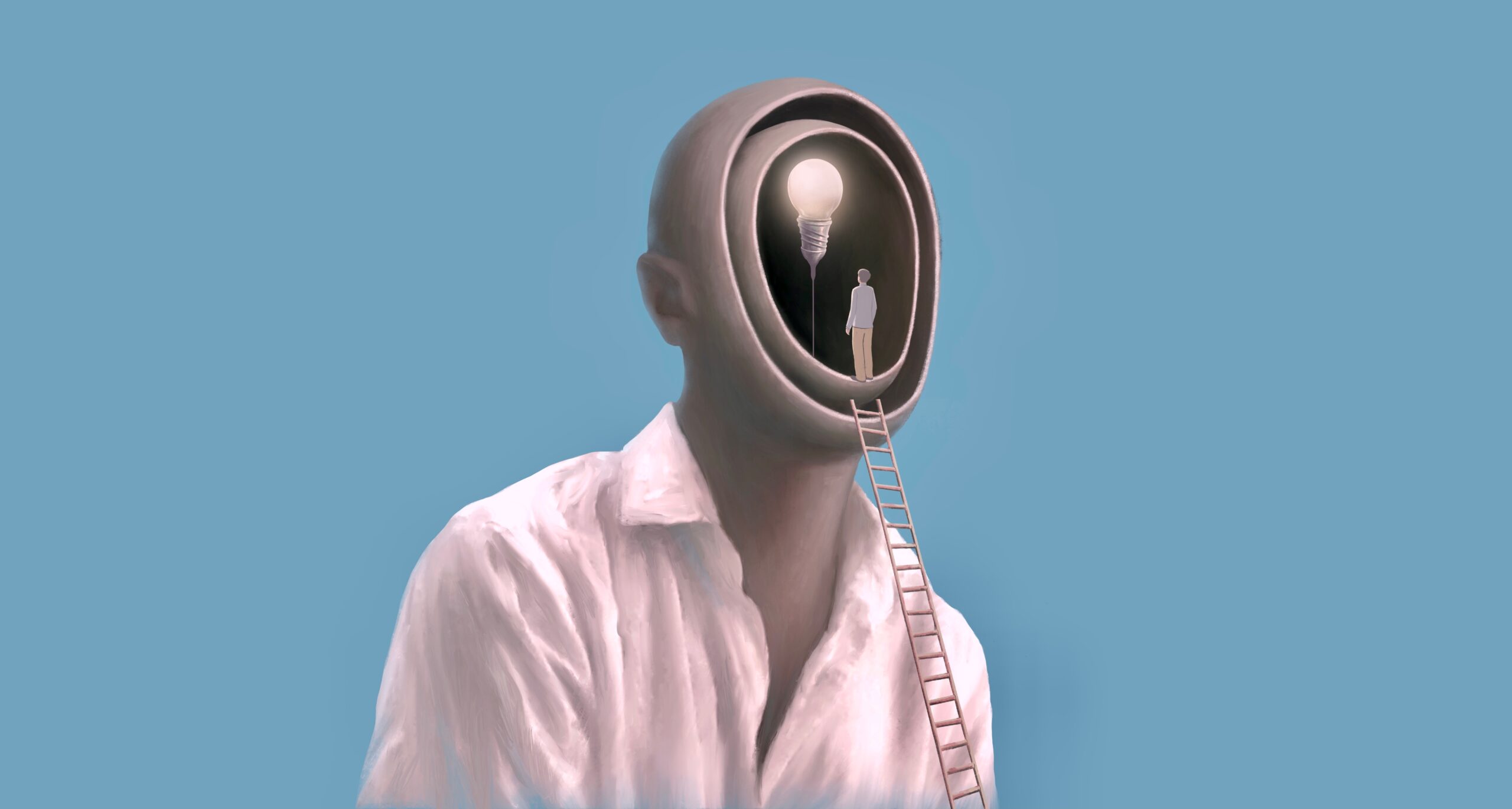
For eighteen days you’ve been chatting each evening with your Future Self. Today, the science of why that isn’t a gimmick, and why it may be the deepest thing in this whole challenge.
Researchers at UCLA led by Hal Hershfield put people in brain scanners and asked them to think about themselves, about strangers, and about themselves ten years from now. The uncomfortable result: for most people, the brain processed their future self almost exactly like a stranger. Neurologically, “future you” is some other person.
Slow down on that finding, because it’s easy to read past. The team was watching a region of the brain that reliably fires more when you think about yourself than when you think about other people. It’s one of the more dependable signatures in this kind of research: self on one level, everyone else on another. When participants thought about themselves a decade out, that self-signature faded. The activity slid toward the pattern for strangers. And the size of the effect varied person to person in a telling way: people whose brains treated their future self more like a stranger also tended to make choices that shortchanged that future self, taking smaller rewards now over larger ones later. The scanner was, in a sense, photographing procrastination’s engine room.
Once you know that, half of human self-sabotage suddenly makes sense. Why save for a stranger’s retirement? Why decline dessert for a stranger’s health? Why do the hard thing today so some stranger can have an easier Tuesday in five years? Procrastination, the researchers argue, is often not a time-management failure but an empathy failure: we dump our work on our future self precisely because we don’t really believe they’re us.
Run yesterday through this lens and watch it explain things. The gym bag packed and ignored: a favour withdrawn from a stranger. The alarm moved from six to seven: a small theft, victim unknown. The dream postponed one more season: a burden shipped to someone you’ve never met, who happens to have your name. None of it feels like betrayal in the moment, and now you know why. There’s no face on the other end.
And the fix follows directly: shrink the distance. In Hershfield’s experiments, people shown aged renderings of their own faces put more than twice as much money into retirement savings as those shown their current faces. Picture the setup: participants met a digitally aged version of themselves, grey, lined, unmistakably them, and then decided how to split money between now and retirement. The ones who had looked their older self in the eye gave that self roughly double. Related studies found the same lever working elsewhere: people who wrote letters to their future selves, and, crucially, wrote replies back, made measurably better health and money choices for weeks afterwards. Vividness is the mechanism. The more detailed, familiar, and emotionally real your future self becomes, the more your present-day brain treats their interests as your own, because it finally believes they are. The usual caveats apply, these are averages, effects fade without practice, no single study runs a life. But the direction of the finding has held up across enough different setups to take seriously: familiarity with your future self changes how you treat them.
“You’ve been postponing your life onto a stranger. Meet them, and you’ll stop.”
Daniel found this out through a pension form, of all things. For years the form arrived, and for years he ticked the minimum box, because the money was needed now and “retirement Daniel” was a rumour. Then his fund’s website added one of those age-rendering tools, mostly as a gimmick, and Daniel clicked it, mostly as a joke. The face that loaded had his mother’s eyes and his own bad posture, and it looked, there’s no other word, patient. Like it had been waiting. He sat there longer than he’d ever sat with that form. Then he raised the contribution, and, stranger still, went for a run that evening, without quite connecting the two. The face wasn’t information. He already knew he’d age. The face was acquaintance. You don’t skim a form that has someone you know inside it.
Notice what the aged face did and didn’t do, because the distinction is the whole finding. It added no facts. Every participant already knew, as an idea, that they would grow old. What it added was contact. There’s a wide gap between knowing something as information and knowing it as a person, and most of our worst decisions live in that gap. Hershfield’s work is best read as a map of that gap and a set of bridges across it: photographs, letters, conversations, anything that turns the idea of your future into someone you’ve met. The bridges are almost embarrassingly low-tech. That’s the good news. You don’t need a scanner or a rendering engine. You need a pen and a habit, which is what this challenge quietly issued you on Day 1.
Now look at what you’ve actually been doing here. Every evening reflection has been an introduction, another few sentences of acquaintance between you and the person you’re becoming. The letters on Day 7 and 14, written back to you in your own quoted words, are Hershfield’s letter exercise with the reply built in. Eighteen days of this and your future self is no longer a stranger. They have a voice, a memory of your week, opinions about your patterns. You’ve been closing the empathy gap nightly and calling it journaling.
Here’s how to use the mechanism deliberately today, beyond the evening chat. Once, at some decision point in your day, the snooze, the snack, the “I’ll start tomorrow”, ask one question before choosing: what am I handing the person I write to every night? Not as guilt. As address. The whole trick of the research is that decisions change when the recipient has a face, and yours finally does. You’ve read their letters. Some choices survive that question comfortably. Rest survives it. Cake often survives it. Postponing the dream tends not to.
So why does today’s act ask you to dance? Because the empathy gap has a twin, and this one keeps an audience. You don’t move to music in your own kitchen for roughly the reason you postpone the dream: some imagined stranger is watching and marking you. Look at the two strangers side by side. One has your face and your name and is waiting for you to arrive. The other was never in the room. You have spent eighteen days learning to do hard things for the first one. Today you get to stop performing for the second. Find the song that makes you happy, play it loud, and move to it for the whole three minutes, kitchen, car, bedroom, wherever nobody is filming. Your future self doesn’t only inherit your discipline. They inherit your capacity for joy, or your slow loss of it, and every year you spend too busy and too self-conscious to move to a song hands them a slightly stiffer, more careful person to be. The muscle that lets you look ridiculous in an empty kitchen is the one that lets you be brave in a full room. Today is the cheap place to train it. Your future self, for the record, is not embarrassed. They remember this song.
Tonight, when you sit down to reflect, notice what eighteen days have built. Somewhere between Day 1 and here, the person on the other end of the conversation acquired a face. They keep your receipts. They remember the phone away, the emotion named, the paragraph about one year from now. Every act you take today is a delivery to their door, and for the first time in your life, you know who signs for it.